
Introduction
In today’s digital world, cybersecurity has become a top priority for organizations of all sizes. Every company that relies on digital systems faces potential threats from hackers and malicious actors. One of the most effective ways to protect your systems is through penetration testing.
Penetration Testing, also known as ethical hacking, is the practice of simulating cyberattacks on a system, network, or application to find vulnerabilities before real attackers exploit them. This proactive approach helps organizations strengthen their security posture and reduce the risk of data breaches. Whether you are a beginner learning cybersecurity or an IT professional seeking practical skills, understanding penetration testing is essential.
What is Penetration Testing?
Penetration testing is a controlled process in which cybersecurity experts attempt to exploit vulnerabilities in a system to evaluate its security. Unlike malicious hackers, penetration testers, also known as ethical hackers, perform these activities with authorization to improve security rather than harm it.
The main goal is to identify weaknesses in hardware, software, network configurations, and even human behavior. By simulating real-world attacks, organizations can understand their security gaps and implement strategies to protect sensitive data.
Penetration testing can cover various areas:
- Network penetration testing: Evaluating internal and external network defenses.
- Web application penetration testing: Finding flaws in websites or apps.
- Mobile application penetration testing: Identifying vulnerabilities in mobile apps.
- Social engineering tests: Assessing human factors like phishing susceptibility.
- Physical penetration testing: Checking security of physical access points.
In short, penetration testing is a critical security exercise that mimics the tactics, techniques, and procedures of cybercriminals while keeping the organization safe.
Why is Penetration Testing Important?
Penetration testing plays a crucial role in modern cybersecurity strategies. Organizations often invest in firewalls, antivirus software, and intrusion detection systems, but these measures alone may not be enough. Penetration testing helps by:
- Identifying hidden vulnerabilities: Some weaknesses are not obvious until actively tested.
- Preventing data breaches: Finding gaps before hackers do can save valuable information.
- Meeting compliance requirements: Many industries require regular penetration testing to comply with regulations like GDPR, HIPAA, or PCI DSS.
- Reducing financial losses: Cyberattacks can cost millions in fines, recovery, and reputation damage.
- Improving security awareness: Testing exposes areas where employee training or policies need improvement.
- Enhancing customer trust: Secure systems build confidence among clients and stakeholders.
By performing regular penetration testing, organizations can stay ahead of evolving cyber threats and maintain a proactive security posture.
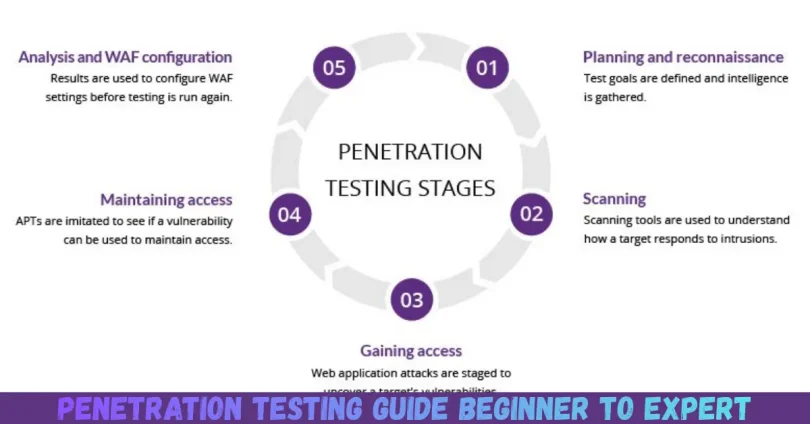
Detailed Step-by-Step Guide to Penetration Testing

Performing penetration testing requires a structured approach. The process is usually divided into phases, each with specific tasks. Below is a detailed step-by-step guide suitable for beginners and intermediate users.
1. Planning and Reconnaissance
The first step in penetration testing is gathering information about the target system. This phase is crucial as it determines the direction of the test.
Steps to follow:
- Define the scope of the test: Determine which systems, networks, and applications are included.
- Obtain proper authorization: Always ensure written permission before testing.
- Identify potential targets: IP addresses, domains, servers, applications, or endpoints.
- Gather information: Use tools like WHOIS, Nmap, or online databases to collect details.
Example: If testing a company’s website, reconnaissance might involve finding subdomains, server software, open ports, and public user accounts.
2. Scanning and Enumeration
Once reconnaissance is complete, the next step is scanning the system for vulnerabilities. This involves active probing to identify open ports, services, and potential entry points.
Key activities:
- Network scanning: Identify active devices and services using tools like Nmap.
- Vulnerability scanning: Use tools like OpenVAS or Nessus to detect weaknesses.
- Enumeration: Extract detailed information such as usernames, software versions, and shared resources.
Example: Discovering an outdated web server version that may be vulnerable to specific attacks.
3. Gaining Access (Exploitation)
After identifying vulnerabilities, penetration testers attempt to exploit them to gain access. This phase tests whether weaknesses can be successfully attacked.
Steps:
- Choose appropriate exploits for identified vulnerabilities.
- Use controlled attacks to access the system.
- Maintain logs to track what was tested and the results.
Example: Exploiting a weak password to gain administrative access to a web application.
4. Maintaining Access (Post-Exploitation)
Post-exploitation assesses the level of access achieved and potential damage a real attacker could cause. This phase helps understand how deeply an intruder can penetrate.
Activities include:
- Creating temporary access to simulate real-world attacks.
- Testing data exfiltration or privilege escalation.
- Identifying sensitive information that could be compromised.
Example: Accessing confidential files or administrative controls without detection.
5. Analysis and Reporting
The final step is documenting findings and providing actionable recommendations. Reporting is a critical phase, as it helps the organization understand risks and take corrective measures.
Report should include:
- Summary of findings and exploited vulnerabilities.
- Steps taken during the test.
- Severity levels of risks.
- Recommendations for fixing weaknesses.
Example: “Update outdated server software, implement stronger passwords, and enable multi-factor authentication.”
Benefits of Penetration Testing
Penetration testing offers numerous advantages to businesses and IT professionals. Some key benefits include:
- Early detection of vulnerabilities: Identify risks before attackers exploit them.
- Improved security posture: Strengthen systems against attacks.
- Cost savings: Prevent expensive data breaches.
- Regulatory compliance: Meet industry standards and legal requirements.
- Increased employee awareness: Educate staff about security best practices.
- Protection of sensitive data: Secure customer and organizational information.
- Enhanced reputation: Build trust with clients and partners.
Disadvantages / Risks of Penetration Testing
While penetration testing is highly beneficial, it comes with some risks that should be managed:
- System crashes: Improper testing can disrupt services.
- Data loss: Exploits may accidentally delete or corrupt information.
- Limited scope: Tests only cover selected areas, leaving other parts vulnerable.
- High cost: Professional testing can be expensive for small organizations.
- False sense of security: Passing a test does not guarantee future immunity.
By understanding these risks, organizations can implement safe and effective testing practices.
Common Mistakes to Avoid
Even experienced testers can make mistakes. Avoiding these pitfalls ensures accurate results and safer testing:
- Skipping planning: Without proper scope and objectives, tests may miss critical areas.
- Lack of authorization: Unauthorized testing is illegal and unethical.
- Overlooking social engineering: Human factors are often the weakest link.
- Ignoring documentation: Poor reporting reduces actionable insights.
- Relying solely on automated tools: Manual testing often uncovers hidden vulnerabilities.
- Not retesting: Security fixes need verification to confirm effectiveness.
Avoiding these mistakes ensures that penetration testing delivers maximum value.
FAQs
1. What is the difference between penetration testing and vulnerability scanning?
Vulnerability scanning identifies potential weaknesses automatically, while penetration testing actively exploits these vulnerabilities to see if they can be breached.
2. How often should penetration testing be performed?
Organizations should conduct penetration testing at least annually, or whenever significant system changes occur, such as new software deployments or network upgrades.
3. Is penetration testing legal?
Yes, but only if conducted with proper authorization. Unauthorized testing is illegal and considered hacking.
4. Can beginners learn penetration testing?
Absolutely. Beginners can start with online labs, virtual environments, and ethical hacking courses to gain hands-on experience safely.
5. What tools are commonly used in penetration testing?
Popular tools include Nmap, Metasploit, Burp Suite, Wireshark, OpenVAS, Nessus, and Hydra. Each tool serves a specific purpose, from scanning to exploitation.
6. Can penetration testing prevent all cyberattacks?
No, it reduces risk but cannot guarantee absolute security. Cybersecurity is an ongoing process involving multiple layers of defense.
7. What is ethical hacking?
Ethical hacking is the practice of testing systems for vulnerabilities with permission to improve security. Penetration testing is a form of ethical hacking.
8. How long does a penetration test take?
Depending on scope and complexity, tests can last from a few days to several weeks. Larger organizations may require extended testing periods.
9. Are there certifications for penetration testers?
Yes, recognized certifications include CEH (Certified Ethical Hacker), OSCP (Offensive Security Certified Professional), and CompTIA PenTest+.
10. Can penetration testing be automated?
Some aspects can be automated, such as scanning and reporting. However, human expertise is essential for accurate exploitation and analysis.
Expert Tips & Bonus Points
- Start with a lab environment: Use virtual machines to practice safely.
- Stay updated: Cyber threats evolve rapidly; continuous learning is essential.
- Document everything: Accurate logs and reports improve the value of testing.
- Combine automated and manual testing: Automation saves time, while manual checks uncover complex vulnerabilities.
- Test human factors: Employees often introduce vulnerabilities, so phishing simulations can be valuable.
- Prioritize risks: Focus on vulnerabilities that pose the greatest threat first.
- Retest after fixes: Confirm that corrective measures are effective.
- Engage in community learning: Join cybersecurity forums and groups to share insights and techniques.
- Use a structured methodology: Follow frameworks like PTES or OWASP for organized testing.
- Learn scripting and coding: Skills in Python, Bash, or PowerShell can enhance testing capabilities.
Conclusion
Penetration testing is a vital component of modern cybersecurity. By simulating real-world attacks, organizations can uncover vulnerabilities before malicious hackers exploit them. For beginners, penetration testing may seem complex, but with the right guidance, tools, and structured approach, anyone can start building practical skills.
Regular penetration testing not only improves system security but also ensures regulatory compliance, protects sensitive data, and enhances organizational reputation. While there are risks and challenges involved, careful planning, thorough documentation, and adherence to ethical guidelines make the process safe and highly effective.