
Introduction
If you are new to the world of cybersecurity, the idea of hacking can seem both exciting and intimidating. Understanding Hacking Tools For Beginners is essential for anyone who wants to start a career in ethical hacking, penetration testing, or simply improve their knowledge about online security. While the word “hacking” often has negative connotations, ethical hacking focuses on using the same techniques hackers employ to find vulnerabilities and secure systems.
Learning about hacking tools for beginners allows you to practice legally, develop problem-solving skills, and gain hands-on experience in cybersecurity. These tools are designed to help you identify weaknesses in networks, websites, and applications. Some tools are simple and user-friendly, while others require a bit more technical knowledge.
What is Hacking Tools for Beginners?
Hacking tools for beginners refer to software or platforms that help newcomers learn cybersecurity and hacking techniques without causing harm. These tools are often used in ethical hacking environments to test systems for vulnerabilities. They can range from network scanners and password crackers to penetration testing suites and vulnerability analyzers.
The main goal of using these tools is to understand how hackers exploit systems so that you can prevent attacks in real-life scenarios. Unlike malicious hacking, learning these tools is completely legal when used in controlled environments or with permission.
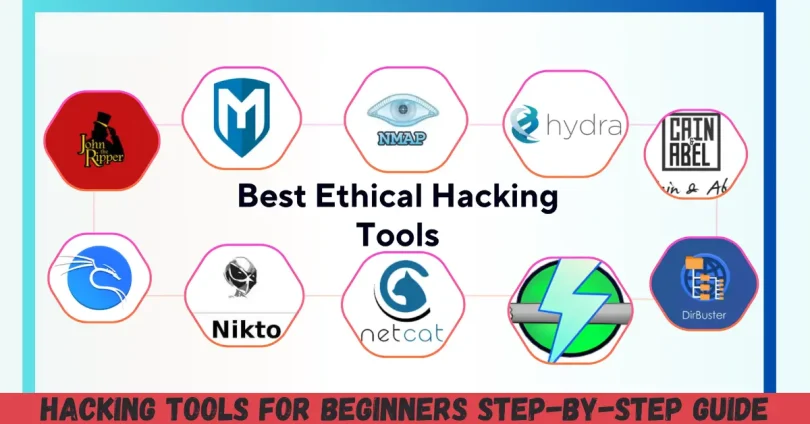
Some beginner-friendly hacking tools include:
- Network scanners like Nmap
- Password cracking tools such as John the Ripper
- Vulnerability scanners like OpenVAS
- Wi-Fi testing tools such as Aircrack-ng
- Web testing tools like OWASP ZAP
These tools are designed to teach you the fundamentals of ethical hacking in a structured and safe way.
Why is Hacking Tools for Beginners Important?
Understanding hacking tools for beginners is important for multiple reasons:
- Enhances Cybersecurity Knowledge: Learning these tools helps you understand how systems can be compromised and how to protect them.
- Career Opportunities: Cybersecurity jobs are in high demand, and knowledge of ethical hacking tools is often a prerequisite.
- Hands-On Learning: Theoretical knowledge alone isn’t enough. Practicing with tools provides real-world skills.
- Risk Mitigation: By learning how attacks work, you can implement measures to prevent them.
- Problem Solving: Ethical hacking challenges you to think like a hacker, improving your analytical skills.
Without familiarity with these tools, even a skilled cybersecurity professional might struggle to identify vulnerabilities or respond effectively to threats.
Detailed Step-by-Step Guide
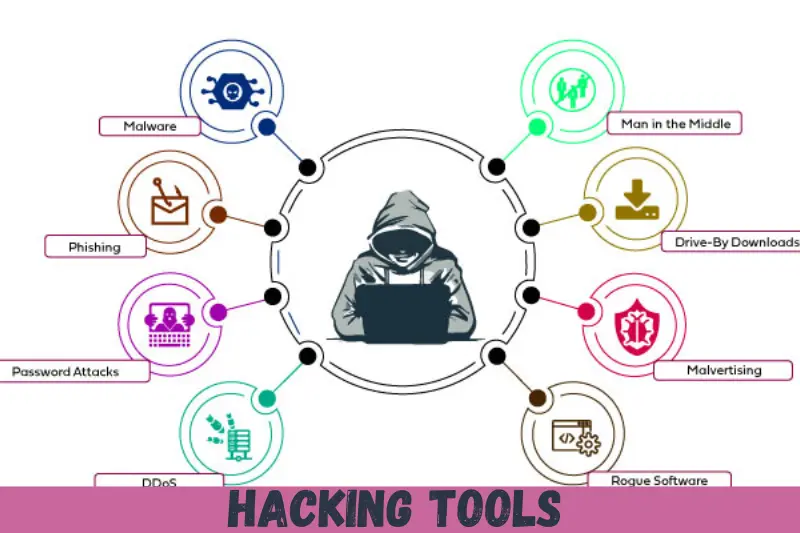
Learning hacking tools for beginners requires a systematic approach. Here’s a detailed step-by-step guide:
Step 1: Set Up a Safe Environment
Before using any hacking tools, create a safe testing environment:
- Use virtual machines like VMware or VirtualBox.
- Install a testing OS like Kali Linux or Parrot Security OS.
- Avoid testing on live systems without permission.
Step 2: Learn Networking Basics
Understanding networking fundamentals is crucial:
- Know about IP addresses, MAC addresses, and ports.
- Learn protocols such as HTTP, HTTPS, FTP, and TCP/IP.
- Practice using networking commands like ping, traceroute, and netstat.
Step 3: Start with Network Scanning Tools
Network scanning tools help identify devices and vulnerabilities:
- Nmap:
Use to scan IP ranges.
Detect open ports and services. - Zenmap:
GUI version of Nmap.
Visualizes network scans.
Step 4: Use Vulnerability Scanners
Vulnerability scanners detect weaknesses in systems:
- OpenVAS: Full-featured vulnerability scanner.
- Nessus: Popular commercial scanner (free limited version available).
- Scan your test environment to identify potential security issues.
Step 5: Learn Password Cracking Tools
Password cracking teaches you how attackers exploit weak credentials:
- John the Ripper:
Command-line tool for password testing.
Supports multiple hash formats. - Hydra:
Brute-force login credentials for multiple protocols.
Useful for learning password security.
Step 6: Practice Wi-Fi Hacking Tools
Understanding wireless network security is critical:
- Aircrack-ng: Crack WEP/WPA keys in a controlled lab.
- Reaver: Test WPS vulnerability on routers.
- Always test on your own network or with permission.
Step 7: Explore Web Application Testing Tools
Web applications are common targets, and learning to secure them is vital:
- OWASP ZAP: Free and beginner-friendly for scanning web apps.
- Burp Suite Community Edition: Intercepts and modifies HTTP requests to find vulnerabilities.
Step 8: Document and Learn
- Keep notes of tools, commands, and results.
- Track progress and understand what each tool does.
- Learn from mistakes and refine your testing methods.
Benefits of Hacking Tools for Beginners
Using hacking tools for beginners has numerous advantages:
- Helps you understand real-world cyber threats.
- Improves problem-solving and critical thinking.
- Provides hands-on experience with security tools.
- Prepares you for cybersecurity certifications.
- Increases awareness of safe online practices.
- Enables legal and ethical testing of systems.
Disadvantages / Risks
While beneficial, these tools carry risks if misused:
- Potential legal consequences if used without permission.
- Can unintentionally damage systems or data.
- Some tools may contain malware if downloaded from untrusted sources.
- Overreliance on tools without understanding underlying concepts.
- Misconfigured tools can expose your own system to attacks.
Common Mistakes to Avoid
Avoid these beginner mistakes:
- Testing on live systems without permission.
- Ignoring basic networking concepts.
- Overusing brute-force attacks without learning other methods.
- Not documenting results properly.
- Downloading tools from unsafe websites.
- Failing to update tools and systems regularly.
FAQs
1. Are hacking tools legal?
Yes, hacking tools are legal when used ethically and in controlled environments. Using them on unauthorized systems is illegal.
2. Which tool is best for beginners?
Nmap, OWASP ZAP, and Aircrack-ng are beginner-friendly and widely used in ethical hacking practice.
3. Do I need programming knowledge?
Basic understanding of Python, Bash, or scripting helps but isn’t mandatory initially.
4. Can I learn hacking without a lab?
Yes, but practical experience is limited. Setting up a virtual lab is highly recommended.
5. Is hacking difficult to learn?
It can be challenging, but starting with beginner tools and gradually learning concepts makes it manageable.
6. How can I stay ethical while learning?
Always use your own systems or systems you have permission to test. Follow cybersecurity guidelines and legal rules.
7. Do these tools work on Windows and Linux?
Most tools are available for Linux, some also support Windows or macOS with limited features.
8. How long does it take to learn hacking tools?
For beginners, understanding basic tools may take 2–3 months with regular practice. Mastery requires ongoing learning.
Expert Tips & Bonus Points
- Always update your tools: Vulnerabilities and features change frequently.
- Combine tools: Use scanners, password testers, and analyzers together for better learning.
- Practice reporting: Write professional vulnerability reports as if working for a company.
- Join communities: Ethical hacking forums and online labs can enhance learning.
- Start small: Focus on one tool at a time before moving to advanced techniques.
- Backup your work: Always have backups to avoid accidental data loss.
- Learn from mistakes: Errors are valuable learning opportunities in cybersecurity.
Conclusion
Learning hacking tools for beginners is the first step toward a successful career in cybersecurity. These tools provide practical experience, improve problem-solving skills, and help you understand how systems can be exploited and secured. Ethical hacking isn’t about breaking the law—it’s about protecting systems and networks from malicious attacks.
By following the structured guide above, you can safely explore hacking in a legal environment, gradually progress from basic to advanced tools, and prepare yourself for certifications and professional opportunities. Remember, consistency, practice, and ethical responsibility are key to becoming a skilled ethical hacker.