
Introduction
In today’s connected world, data is one of the most valuable assets for any business or individual. From customer records to financial details, sensitive information is stored and shared digitally every day. As a result, cybercriminals are constantly looking for weak points to exploit. This is where Data Breach Solutions become essential. They help organizations and individuals prevent unauthorized access, reduce damage, and recover quickly when incidents occur.
A data breach can happen to anyone, not just large companies. Small businesses, startups, and even personal users are often targeted because they may lack strong security measures. One mistake, such as a weak password or outdated software, can open the door to serious trouble. Therefore, understanding data breach risks and knowing how to deal with them is no longer optional.
What is Data Breach Solutions?
Data breach solutions refer to the tools, strategies, and processes used to prevent, detect, respond to, and recover from unauthorized access to data. These solutions are designed to protect sensitive information such as personal details, payment data, business records, and login credentials.
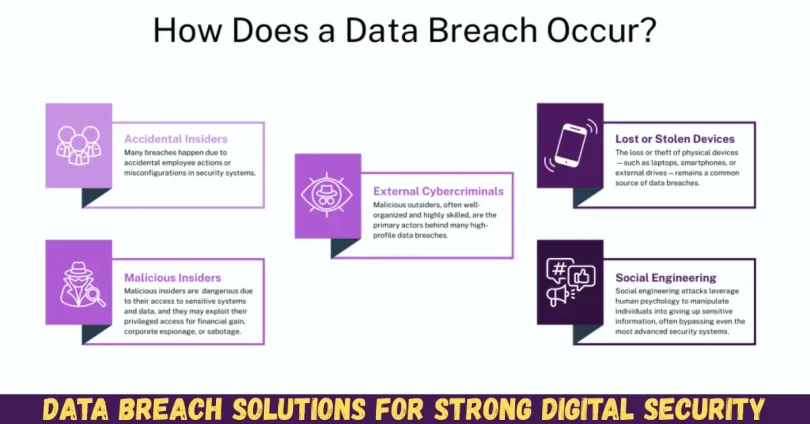
A data breach occurs when information is accessed, stolen, or exposed without permission. This can happen through hacking, malware, phishing emails, insider threats, or even physical theft of devices. Data breach solutions focus on reducing the chances of these events and minimizing damage if they occur.
These solutions include technical measures like encryption and firewalls, as well as human-focused practices such as employee training and clear security policies. Together, they create a strong defense system that protects data at every stage of its lifecycle.
Why is Data Breach Solutions Important?
Data breach solutions are important because data loss can cause serious harm. Financial losses, legal penalties, reputational damage, and loss of customer trust are common outcomes after a breach.
When data is exposed, affected individuals may face identity theft or financial fraud. Businesses may suffer downtime, lawsuits, and long-term damage to their brand. In many regions, organizations are also legally required to protect user data and report breaches quickly.
Implementing strong data breach solutions helps organizations stay compliant with regulations, protect their reputation, and ensure business continuity. It also shows customers that their data is taken seriously, which builds confidence and loyalty over time.
Detailed Step-by-Step Guide
Step 1: Identify Sensitive Data
The first step is to understand what data needs protection. This includes customer information, employee records, financial data, and intellectual property.
Create a clear list of where this data is stored, how it is used, and who has access to it. Without knowing what you are protecting, it is impossible to secure it properly.
Step 2: Assess Security Risks
Once data is identified, evaluate potential risks. Look for weak passwords, outdated software, unsecured networks, and lack of access controls.
Risk assessments help highlight gaps in current security practices. This step allows you to prioritize actions based on the most critical threats.
Step 3: Implement Strong Access Controls
Limit data access to only those who truly need it. Use role-based access and multi-factor authentication to reduce unauthorized entry.
Strong access controls are one of the most effective data breach solutions because they reduce human error and insider threats.
Step 4: Encrypt Sensitive Information
Encryption protects data by converting it into unreadable formats for unauthorized users. Even if data is stolen, encryption makes it useless without the correct keys.
Use encryption for data stored on servers, devices, and during transmission across networks.
Step 5: Monitor Systems Continuously
Continuous monitoring helps detect unusual activity early. Use security tools that alert you to suspicious logins, data transfers, or system changes.
Early detection reduces response time and limits the impact of a breach.
Step 6: Create an Incident Response Plan
An incident response plan outlines what to do during a data breach. It defines roles, communication steps, and recovery actions.
Having a clear plan reduces confusion, speeds up response, and ensures legal and regulatory requirements are met.
Step 7: Train Employees Regularly
Employees are often the first line of defense. Regular training helps them recognize phishing attempts, handle data safely, and report issues quickly.
Human awareness is a critical part of effective data breach solutions.
Step 8: Review and Update Regularly
Security is not a one-time task. Review policies, tools, and procedures regularly to adapt to new threats and technologies.
Continuous improvement keeps your data protection strategy strong and relevant.
Benefits of Data Breach Solutions

- Protects sensitive and confidential information
- Reduces financial losses from cyber incidents
- Builds customer trust and brand credibility
- Helps meet legal and regulatory requirements
- Improves overall system reliability
- Enhances incident response and recovery speed
- Supports long-term business stability
Disadvantages / Risks
- Initial setup costs can be high
- Requires ongoing maintenance and updates
- May slow down systems if poorly implemented
- Employee resistance to new security rules
- False alerts can cause confusion
- Overreliance on tools without proper training
Common Mistakes to Avoid
One common mistake is relying only on technology while ignoring human factors. Security tools are important, but untrained employees can still cause breaches.
Another mistake is using weak passwords or reusing them across systems. This makes it easier for attackers to gain access.
Failing to update software regularly is also risky. Outdated systems often contain known vulnerabilities.
Finally, many organizations do not test their incident response plans. Without practice, real responses may be slow and ineffective.
FAQs
What is the most common cause of data breaches?
Phishing attacks are one of the most common causes. They trick users into sharing login details or downloading malicious files.
Are small businesses at risk of data breaches?
Yes, small businesses are often targeted because they may have weaker security measures and limited resources.
How long does it take to recover from a data breach?
Recovery time varies. Some breaches take weeks, while others may take months depending on damage and response quality.
Is encryption enough to prevent data breaches?
Encryption is important but not enough alone. It should be combined with access controls, monitoring, and training.
Do data breach solutions guarantee full protection?
No solution offers complete protection. However, strong strategies greatly reduce risk and impact.
How often should security policies be updated?
Policies should be reviewed at least once a year or whenever new threats or technologies emerge.
Expert Tips & Bonus Points
Always assume that a breach is possible and prepare accordingly. Proactive planning reduces panic and damage.
Use layered security instead of relying on a single tool. Multiple defenses make attacks more difficult.
Document all security processes clearly. Clear documentation improves consistency and accountability.
Test your systems regularly using simulations or audits. Testing reveals weaknesses before attackers do.
Encourage a security-first culture. When everyone feels responsible, protection becomes stronger.
Conclusion
Data protection is no longer a technical issue limited to IT teams. It is a shared responsibility that affects businesses, employees, and users alike. Effective Data Breach Solutions help reduce risks, protect valuable information, and maintain trust in an increasingly digital world. By understanding what data needs protection, identifying risks, and applying practical security measures, organizations can significantly lower their chances of facing serious incidents.
This guide has explained data breach solutions in a simple and structured way. From identifying sensitive data to training employees and planning responses, each step plays an important role. While no system is perfect, consistent effort and awareness can greatly reduce damage when threats arise.